With the March winds came the bluebirds, and we are thrilled to see them returning. So far this spring, we have observed 13 pairs of adults (26 birds) on San Juan Island that are actively nesting. Some females are already incubating eggs, others are still building their nests. A few other birds have been sighted but have not been identified just yet.
Especially promising this year is an increase in the number of returning females that were hatched here on San Juan Island. Returning females and a balanced sex ratio are good indicators of a self-sustaining population.
This year Kathleen will be monitoring the populations and we’ll be keeping a careful watch to see how well our initial 5-year effort, with active translocations of birds from Ft Lewis and Oregon, will pay off.
The bluebird project continues north of the border! In an effort to restore Western bluebirds to the entirety of their northern range, two pairs of birds were successfully translocated from Ft. Lewis to The Nature Conservancy Canada’s Cowichan Preserve on Vancouver Island. This is the first translocation of the “Bring Back the Bluebird” project conducted by GOERT (Garry Oak Ecosystem Recovery Team, based in Victoria, BC) which was modeled on our successful project here in the San Juan Islands. Gary Slater of Ecostudies Institute coordinated the translocations. We will be anxiously monitoring to see how our neighbors (neighbours?) to the north carry the legacy of restoring the bluebird to their islands.
The numbers speak for themselves: 92 Adult Western Bluebirds were translocated from the Ft. Lewis, Washington and Willamette Valley, Oregon prairies. 238 baby bluebirds fledged on San Juan Island (possibly even more!). We have a current population size (returning adults) of 38. Over 600 nestboxes were placed on 10 different islands. 376 acres of current/historic oak prairie were permanently conserved. Over 300 community members became involved as volunteers and nest box hosts.
2007-2011 Project Accomplishments
After a 5-year run, the San Juan Islands Western Bluebird Reintroduction Project is wrapping up. We have a lot to celebrate.
Consider this:
This project marks the first successful reintroduction of a migratory songbird completed in the United States.
Releases and nest box placement were conducted almost entirely on private lands; nearly unheard of in reintroduction efforts of this sort.
All of our funding came from individual donors and private foundations; we received no government funding whatsoever for this project.
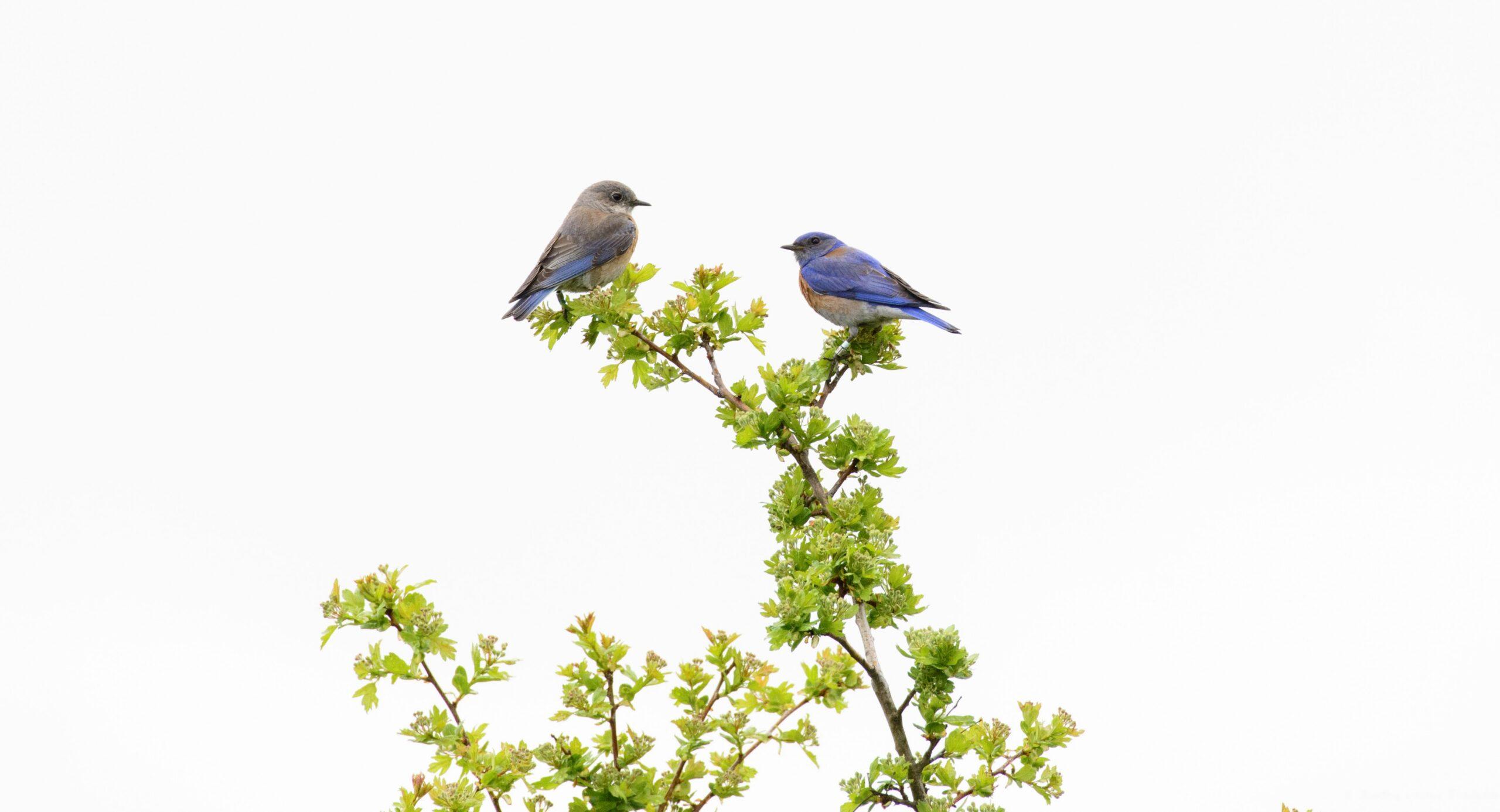
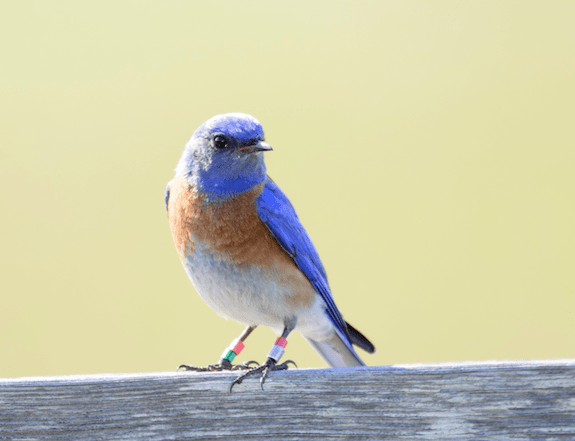
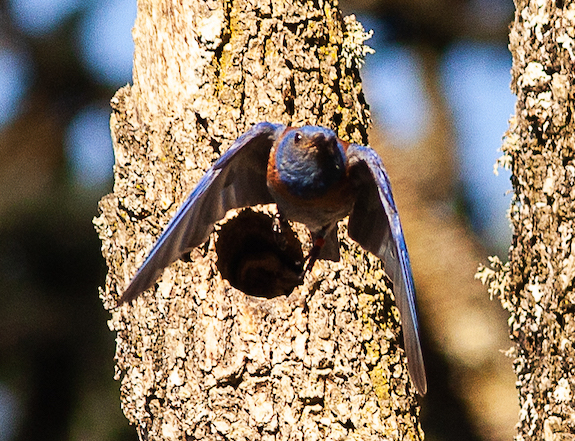
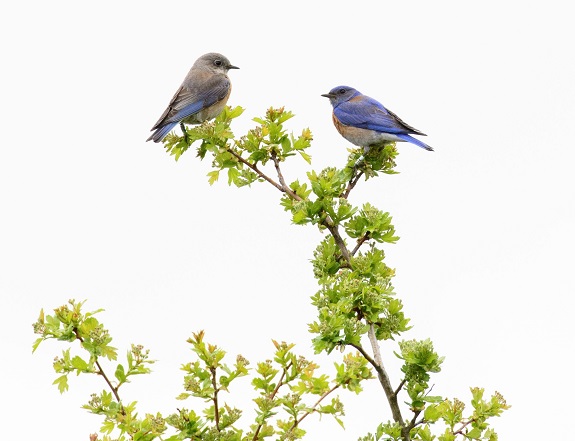
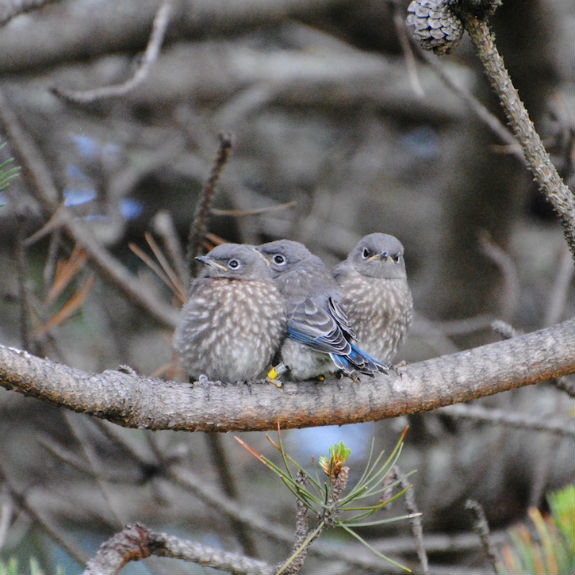
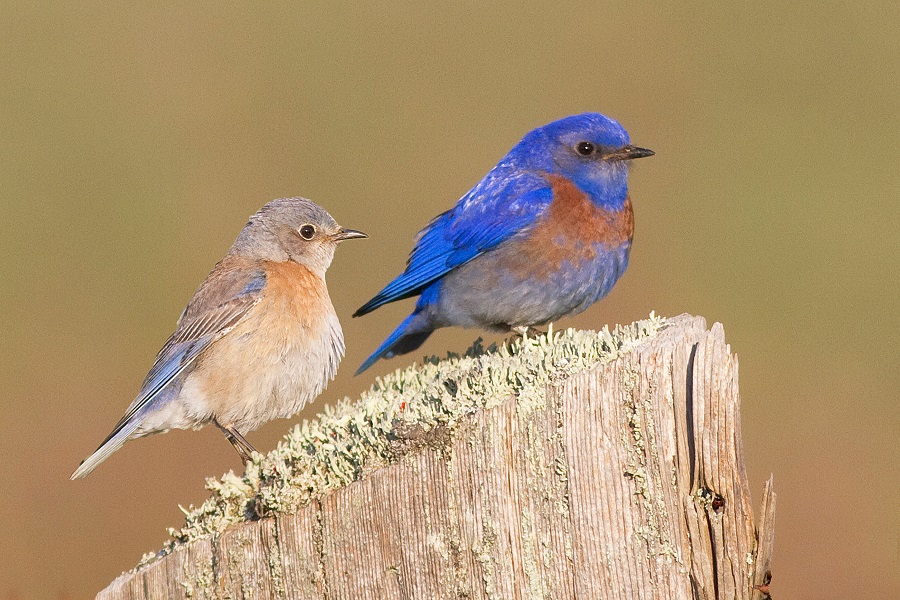
Bluebird family, San Juan Island (photo: Kathleen Foley)
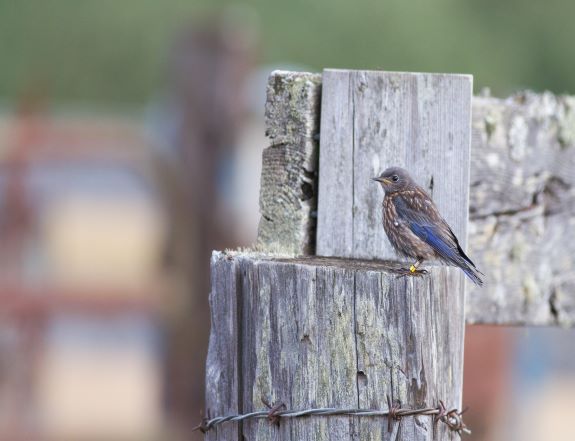
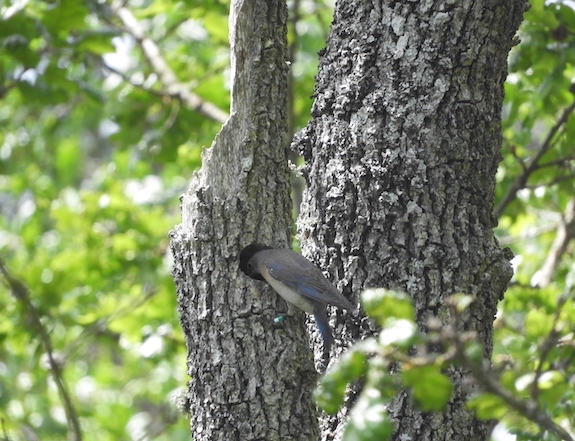
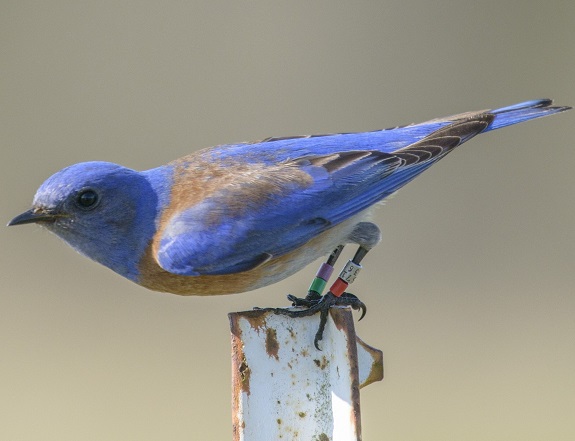
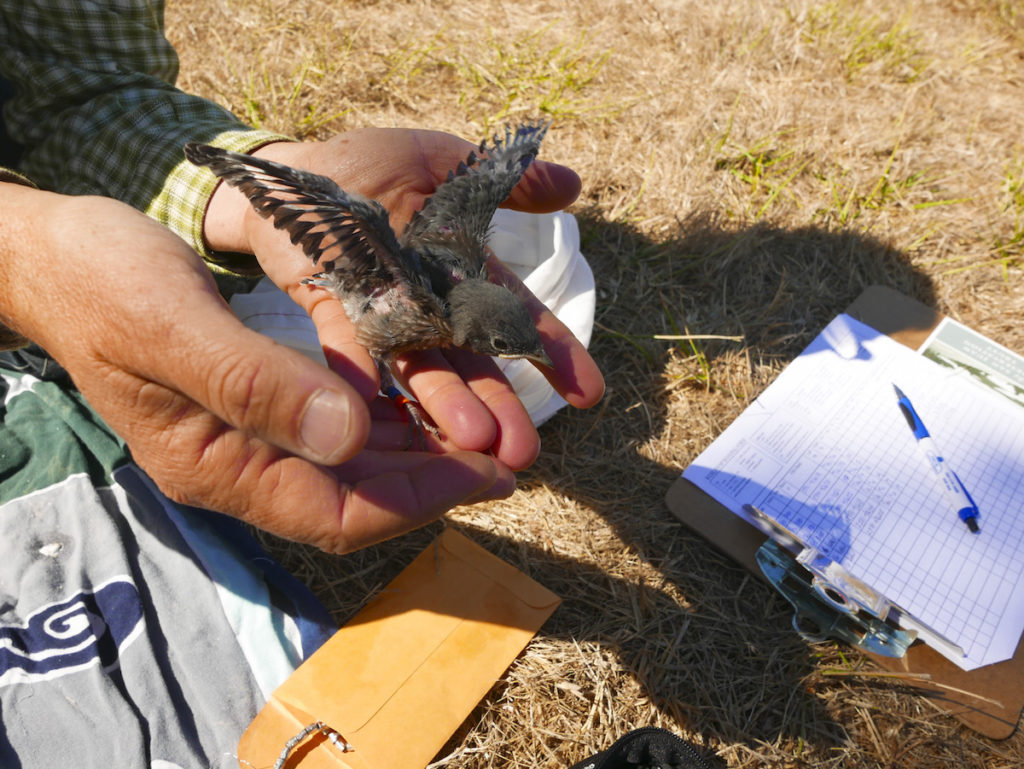
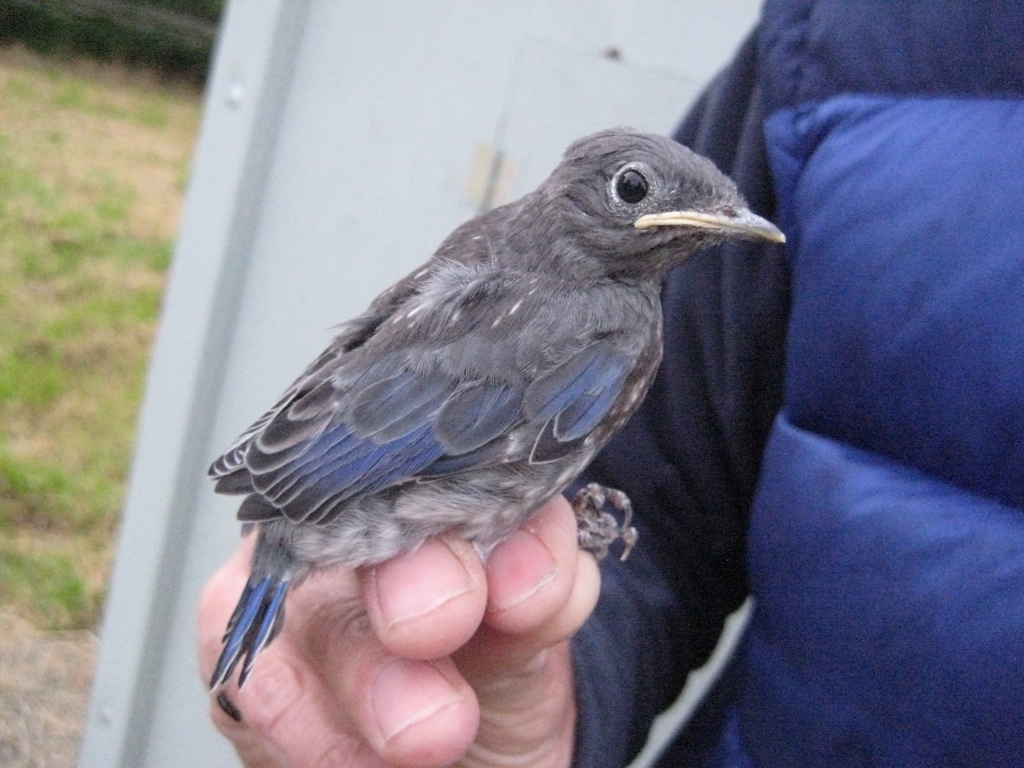
Juvenile bluebird, San Juan Island (photo: Adrienne deLiso)
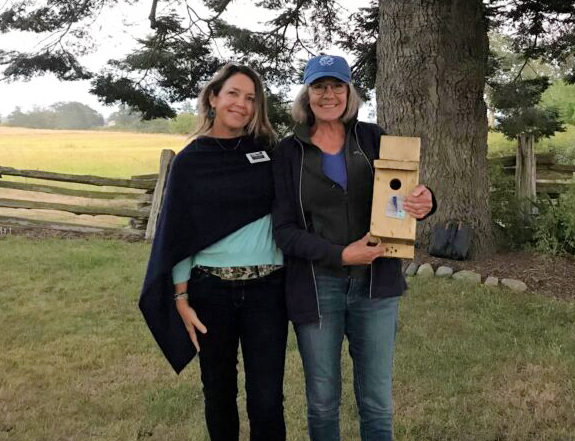
Although this first phase of the project is “over,” we have more to do. Although the translocations will cease, we will be seeking funding to continue monitoring the population for the next several years to make sure that the numbers of returning and breeding adults continues on its upward trajectory. We will be relying on islanders’ sightings and observations more than ever now that we will no longer have a full-time technician to scout for the birds.
For those who are hosting nest boxes, please remember to clean out your nestboxes each fall and continue to vigilantly remove English house sparrow nests before the young hatch (house sparrows are a distinct and very real threat to bluebirds). Keep those binoculars dusted off and ready to report the first returns in the spring. It will be imporant to continue tracking leg band colors (we know – this can be tricky), as it helps us identify the movements and survival of individuals.
Report any sightings and activity directly to Kathleen Foley at 360-298-1856 or 360-378-2461 (note that the “Bluebird Hotline” number has been disconnected).
These birds have come home. After a long absence of 50+ years, they are now part of our islands and ecosystem again. They will continue to grace our islands only with our help and good stewardship. Please continue to embrace and support their presence here and help us to ensure that they never disappear again. Thank you!
Nestling bluebirds
Fledglings
(all photos: Kathleen Foley)
Holding aviary on San Juan Island
(Want to get caught up on what happened this past year? Download any of these Bluebird Updates from the 2011 season; or check out this great overview video created for us by Jane K. Fox.)
Announcing the San Juan Islands Western Bluebird Reintroduction Project Project History and Partners
The American Bird Conservancy (ABC) in cooperation with the San Juan Preservation Trust (SJPT), the San Juan County Audubon Society, and the Ecostudies Institute is working to reestablish a breeding population of Western Bluebirds (Sialia mexicana) to areas of their historic range where they have been extirpated in the San Juan Islands. Western Bluebirds were considered common in the San Juan Islands in the 1930s, but extirpated by 1964. Unlike many species, the cause for the decline and regional extirpations of Western Bluebird was less due to loss or degradation of their habitat type (prairie-oak), than it was to loss of a particular habitat element, cavities for nesting. The establishment of nestbox programs to replace the loss of cavities in snags has been used successfully to restore bluebird populations in many areas of North America.
Today, suitable habitat of sufficient size exists on several islands in the San Juan archipelago to support a viable population of Western Bluebirds. Additionally, there has been a considerable amount of oak-prairie habitat conservation implemented through the traditional modes of land protection, habitat management, education and outreach, etc. However, the retraction of the species distribution approximately 100 miles to the south at this northern extent of its range, and the unsuitable nature of the intervening habitat (water and urban/residential) makes it highly unlikely for reestablishment of the species in the extirpated areas through natural recolonization.
There are two goals for the reintroduction project. One is to reestablish a breeding population of Western Bluebirds in the San Juan Islands, Washington and Vancouver Island, British Columbia through the conservation technique of translocating birds from an expanding population on Fort Lewis Military Installation, Washington. Conservation practioners are increasingly relying on species reintroductions as a tool to help reestablish extirpated populations, especially where natural recolonization is unlikely and habitat conservation efforts are ongoing. The project was initiated in Spring, 2007 and will occur over a 5-year time period, the approximate time needed to establish a stable population of reintroduced Eastern Bluebirds to Everglades National Park, a project from which this project is modeled. We will translocate 5-10 pairs of bluebirds each year with a target of approximately 90 adult bluebirds to be reintroduced into the project area.
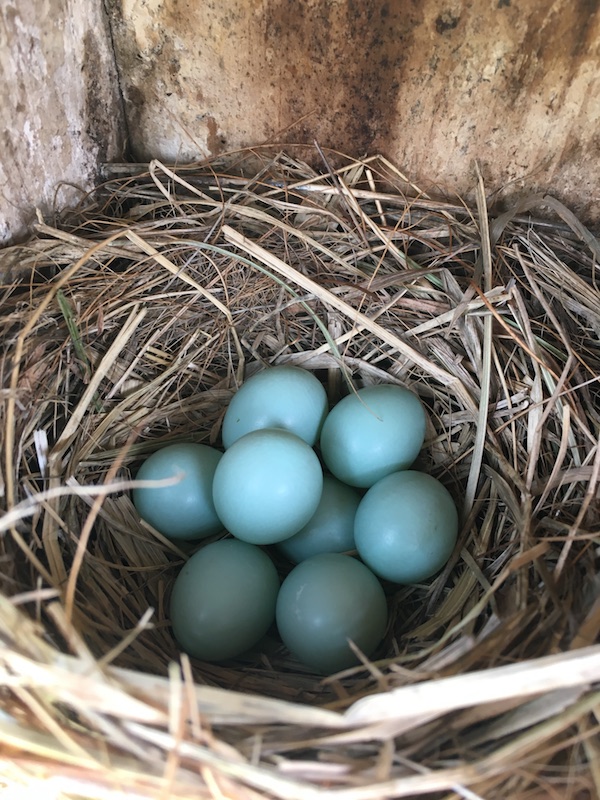
The second project goal is to use the Western Bluebird reintroduction as a flagship project for community-based education and local participation to support conservation of the entire biodiversity of the highly threatened oak-prairie ecosystem. One of the strengths of this project is the participation and support of local community organizations and individuals. The San Juan Preservation Trust, the San Juan County Audubon chapter, and The Nature Conservancy have pledged in-kind time of their local staff and membership to assist in various aspects of the project including potential release sites, field assistance, bird monitoring, construction of nest boxes and aviaries, and promotion and outreach. Additionally, a number of private landowners on San Juan Island with ideal bluebird habitat on their properties have agreed to provide space for aviaries and nest boxes. The project partners are confident that having individual landowners working in partnership with these conservation groups will ensure the success of this exciting program. About the Western Bluebird Physical Description: The Western Bluebird is part of the Turdidae family, which includes robins and thrushes. It is 6-7" (15-18 cm) long, and a long-winged, rather short-tailed bird. Males and females are easily distinguished from one another: the male has deep blue hood and upperparts; rusty red breast and crescent mark across upper back with a white belly. The female is sooty gray above, with dull blue wings and tail. Juveniles look like the female but are grayer, with speckled underparts. Females are attracted by the vivid blue of the male and by the availability of nesting holes. Once the male secures a nesting hole he entices the female with a colorful display that also serves to repel rivals. His rusty breast, like that of the American Robin, is used to signal aggression toward other males. Nesting: 4-6 pale blue eggs in a grass nest placed in a tree cavity or nest box. Voice: Soft calls sound like “phew” and “chuck”. Song is a short, subdued “cheer, cheer-lee, churr.” Range: Breeds from southern British Columbia and western Alberta south to Baja and east throughout the mountains of the West to eastern New Mexico and extreme western Texas. Winters throughout most of breeding range, although northernmost populations usually withdraw slightly southward.
The Western Bluebird was once a common breeder and migrant in the San Juan Islands, and could also be found uncommonly as a winter resident. According to Lewis and Sharpe (1987), flocks of these birds were seen migrating on the south and west sides of San Juan Island in the fall and spring, up until 1963. They were “common” on the South side of Mt. Dallas in the 1930’s, and “somewhat common” nesters at Mt. Finlayson and near Deadman Bay. The last reported breeding pair was present on Lopez in 1964. Mountain Bluebirds can still be found rarely in the San Juan Islands, as a migrant or winter visitor. Habitat needs: Open woodlands, agricultural fields, prairies with abundance of low perching areas, pastureland, parks away from human traffic, cemeteries, golf courses (provided no pesticides are used). Heavily wooded and brushy areas as well as areas where the English House Sparrow are abundant (towns, cities, farmsteads and feedlots) are not suitable bluebird habitat. Bringing Back the Bluebird: the Reintroduction Plan
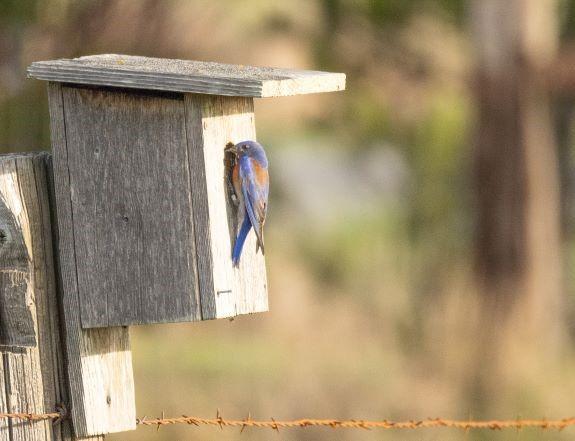
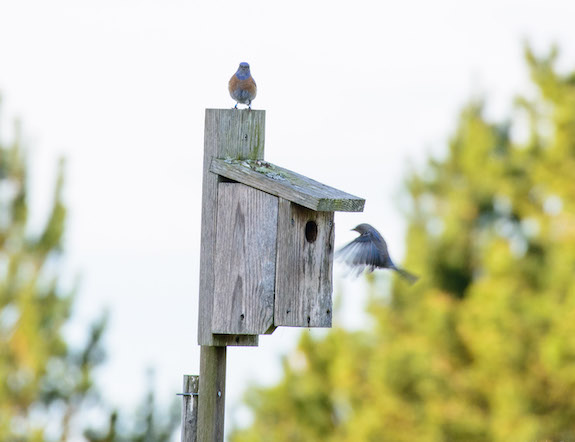
Beginning in the Spring of 2007, 4-5 pairs of nesting Western Bluebirds were captured from the large and healthy population of bluebirds at the Ft. Lewis Prairie. These birds were transported to the San Juan Islands. For the first several years of this project, release locations focused on San Juan Valley due to its ideal habitat for bluebirds. Captured pairs were placed in portable aviaries, and left to acclimatize to their new surroundings for several days. During this time they were closely monitored by researchers. After several days, the pairs will be released from the aviaries. At the release locations, and in many other suitable areas around San Juan Island, 250 nest boxes (and counting!) have been placed. Our hope is that the breeding pairs will then establish residence in these nest boxes. Landowners and our summer field technicians keep watch on where the birds go, and report nesting activity. At the end of the nesting season, all boxes/aviaries will be cleaned, and ready to use again for the next season. If all goes well, this process will be repeated for up to 5 years, until a target of 90 bluebirds have been released in the San Juans. Initially, the release sites will be concentrated in San Juan Valley, but if the program is successful, there is potential to expand to other areas in the islands (such as Lopez, where historical records document the presence of breeding bluebirds).
This reintroduction plan is subject to "adaptive management": as we learn from each year's successes and setbacks, plans for the reintroduction efforts may change. How Can You Help?
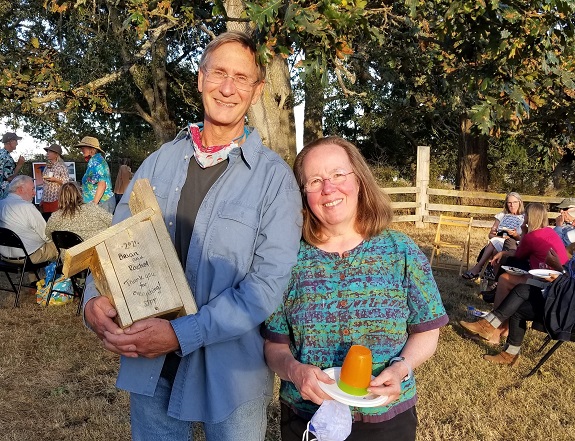
This project will “fly”, so to speak, only with the help of many, many volunteers. We need people to help construct nest boxes and aviaries, to place the nest boxes, landowners on Lopez, San Juan, Shaw and Orcas Islands to be nest box hosts. Please see our volunteer information sheet for a full description of volunteer needs and to sign up to help. Contacts and More Information
The San Juan Islands Western Bluebird Reintroduction Project is a partnership between the American Bird Conservancy, the San Juan Preservation Trust, the San Juan Islands Audubon Society, and the Ecostudies Institute.
To volunteer for the project or to find out more information:
Kathleen Foley, Director of Education and Outreach, the San Juan Preservation Trust (378-2461) or kathleenf@sjpt.org
Barb Jensen, SJI Audubon Society (378-3068) Other contacts:
Bob Altman, American Bird Conservancy (541-745-5339)
Gary Slater, Ecostudies Institute (360-416-6707) About the American Bird Conservancy
American Bird Conservancy (ABC) is a 501(c)3 not-for-profit organization, whose mission is to conserve wild birds and their habitats throughout the Americas. ABC draws on people and organizations through bird conservation networks to identify the most critical issues affecting birds in the Americas. It builds coalitions of conservation groups, scientists, and the public to tackle conservation priorities using the best skills and expertise available. www.abcbirds.org About the SJC Audubon Society
San Juan County has its own local chapter of the National Audubon Society; National Audubon's mission is to conserve and restore natural ecosystems, focusing on birds, other wildlife, and their habitats for the benefit of humanity and the earth's biological diversity. www.audubon.org About the Ecostudies Institute
The mission of the Ecostudies Institute, a non-profit organization, is to improve the understanding of ecological systems and the species that inhabit them and to promote conservation, management, and restoration efforts that protect and maintain native biodiversity. Researchers from EI led a successful Eastern Bluebird reintroduction project in the Everglades, FL, after which this project is modeled. www.ecoinst.org
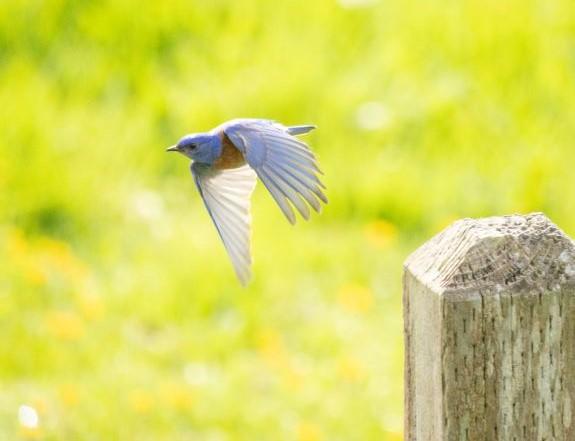
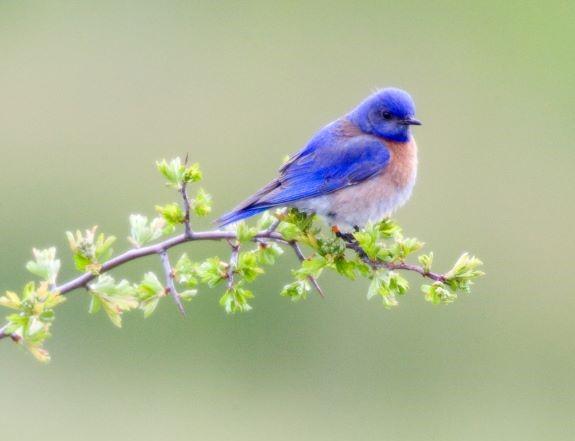
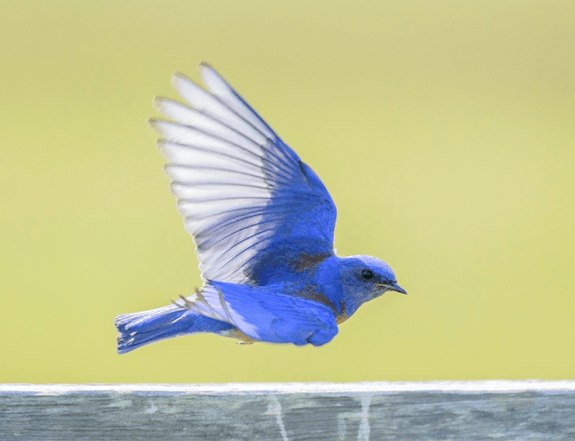
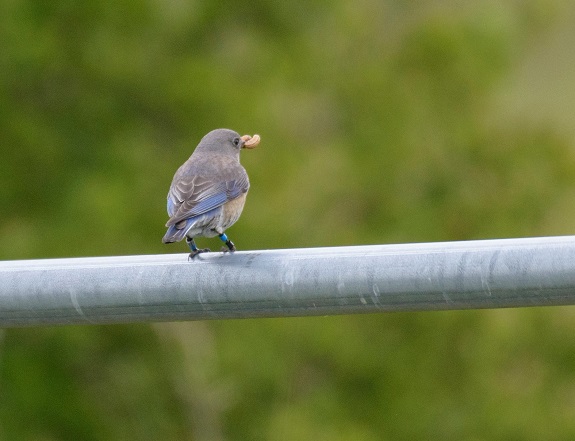
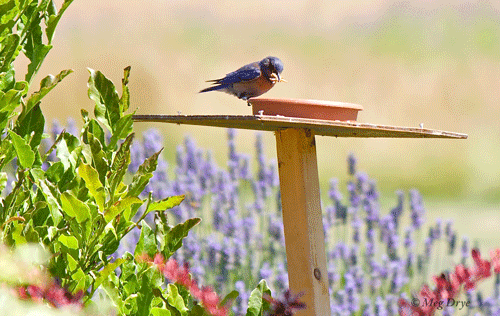
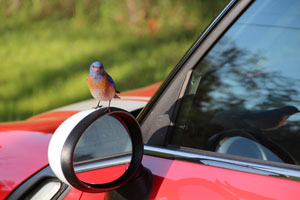
Western bluebirds have been released on San Juan Island as part of a reintroduction program. Some birds are wearing leg bands.
Identification Tips:
• Length: 5.5 inches (smaller than a robin)
• Thin bill
• Where found: In open habitat, pastureland, meadows; perched on fencelines Adult male:
• Bright blue upperparts and throat
• Brownish patch on back
• Orange-red breast and sides
• Gray belly and undertail coverts Adult female:
• Blue wings and tail-duller than male
• Gray crown and back
• Eye ring
• Gray throat
• Brownish wash to breast and sides
• Gray belly and undertail coverts
We need your help! Please report any bluebird sightings to: Kathleen Foley, The San Juan Preservation Trust (378-2461 or kathleenf@sjpt.org)
Citizen sightings are critical for us to track the whereabouts of the Western bluebirds that have been released. Even if you are not certain if your sighting is that of a Western bluebird, we would still love to hear from you. Please note that these birds are wearing colored leg bands...this will differentiate them from any other songbird in the region. To report ANY Western bluebird sighting (with leg bands, or without) contact Kathleen Foley at the San Juan Preservation Trust (378-2461) or Barbara Jensen at San Juan Islands Audubon at 378-3068.
THE SAN JUAN ISLANDS WESTERN BLUEBIRD REINTRODUCTION PROJECT IS MADE POSSIBLE BY:
Primary Coordinating Partners
The San Juan Preservation Trust
American Bird Conservancy
Ecostudies Institute
San Juan Islands Audubon Society
Ft. Lewis Military Installation
Washington Department of Fish and Wildlife
In Cooperation With:
Wolf Hollow Wildlife Rehabilitation Center
The Nature Conservancy
Pacific Coast Joint Venture
Principal Funding Sources
Disney Wildlife Conservation Fund
Zoo Boise Conservation Fund
Horizons Foundation
Norcliffe Foundation
Wildlife Forever Fund
American Bird Conservancy Donors
San Juan Preservation Trust