We are thrilled to share that the 30-acre Mt. Ben West Preserve on San Juan Island is now permanently protected as of March 31, 2026.
For more than 20 years, SJPT staff, partners, and supporters have held a simple but ambitious vision for the west side of the island: to connect public lands from the shoreline of the Salish Sea to the summit of Mt. Ben. This remarkable 30-acre property was the missing piece. With its protection, a once-disconnected region of conserved lands now forms a continuous corridor, moving through Garry oak habitat, rocky balds and open grasslands, past mature Douglas-fir, and out to sweeping views of Haro Strait.

What Happens Next
While we're now celebrating this conservation success, this is only the beginning of Mt. Ben West Preserve's long stewardship story. In the years ahead, our work will focus on careful restoration and thoughtful planning, including:
- Removing existing structures on the property
- Restoring native habitat, including Garry oak savannahs
- Supporting the long-term health of the forests
- Planning and designing a public trail

A couple of our staff in front of a majestic Garry oak on Mt Ben West Preserve | Staff archive
Future Public Access
We know many people are eager to visit—we are too! But for now, Mt. Ben West Preserve is not yet open to the public. Public access is anticipated in 2028, following careful planning and collaboration with the San Juan County Conservation Land Bank to develop a trail system that connects with neighboring public lands.
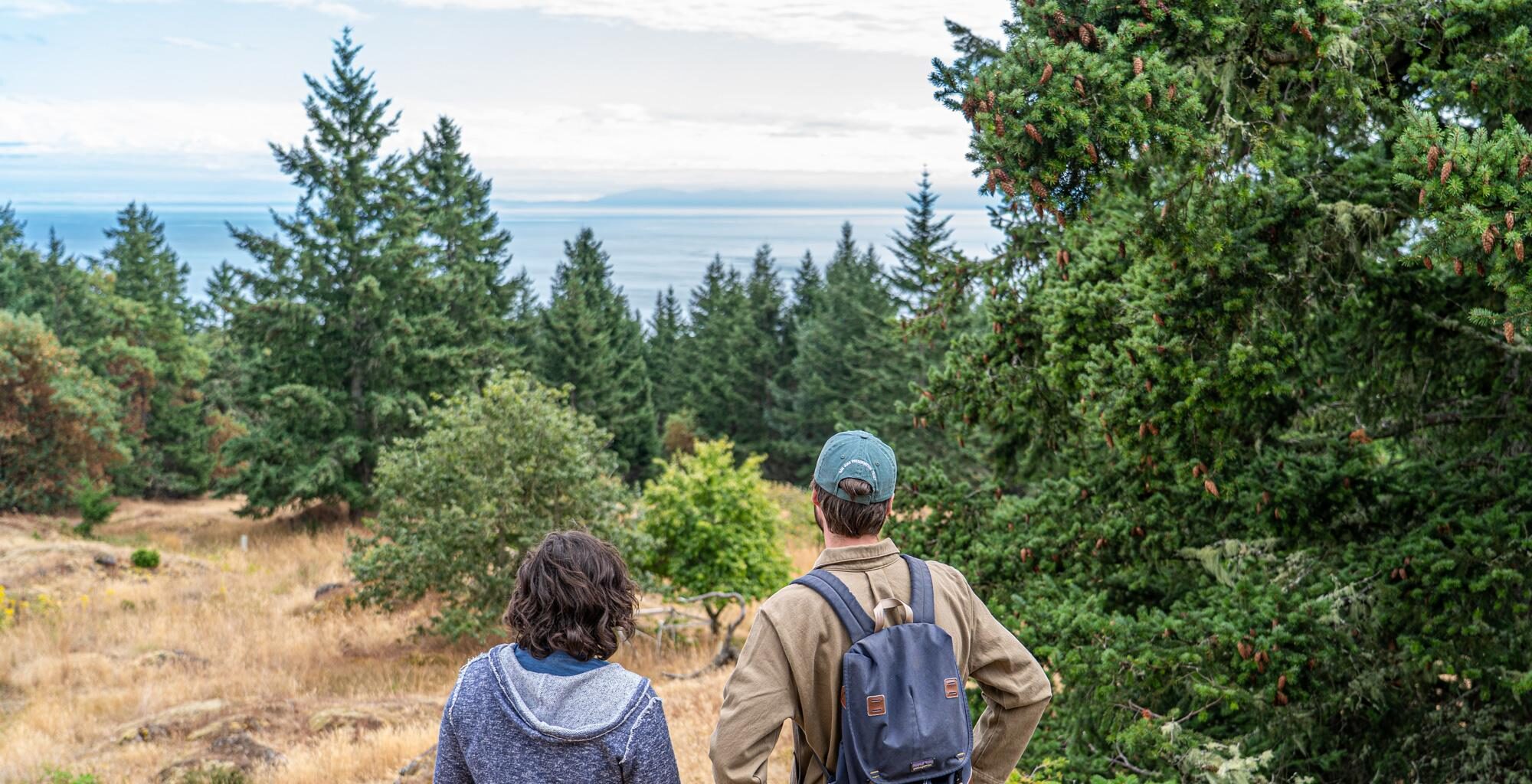
Staff looking out over the view of Haro Strait from the top of Mount Ben | Staff archive
With Gratitude to Our Community
The protection of the Mt. Ben West Preserve marks a once-in-a-generation conservation success, and it happened because of you, a community that cares deeply for this special place. Supporters from across the region came together to raise $1.84 million, making it possible for the Preservation Trust to complete the purchase.
This Preserve protects unique island habitat, expands opportunities for public access, and ensures that this extraordinary landscape will remain healthy, intact, and accessible—for people, plants, and wildlife—for generations to come. We are deeply grateful to everyone who helped bring this vision to life.