
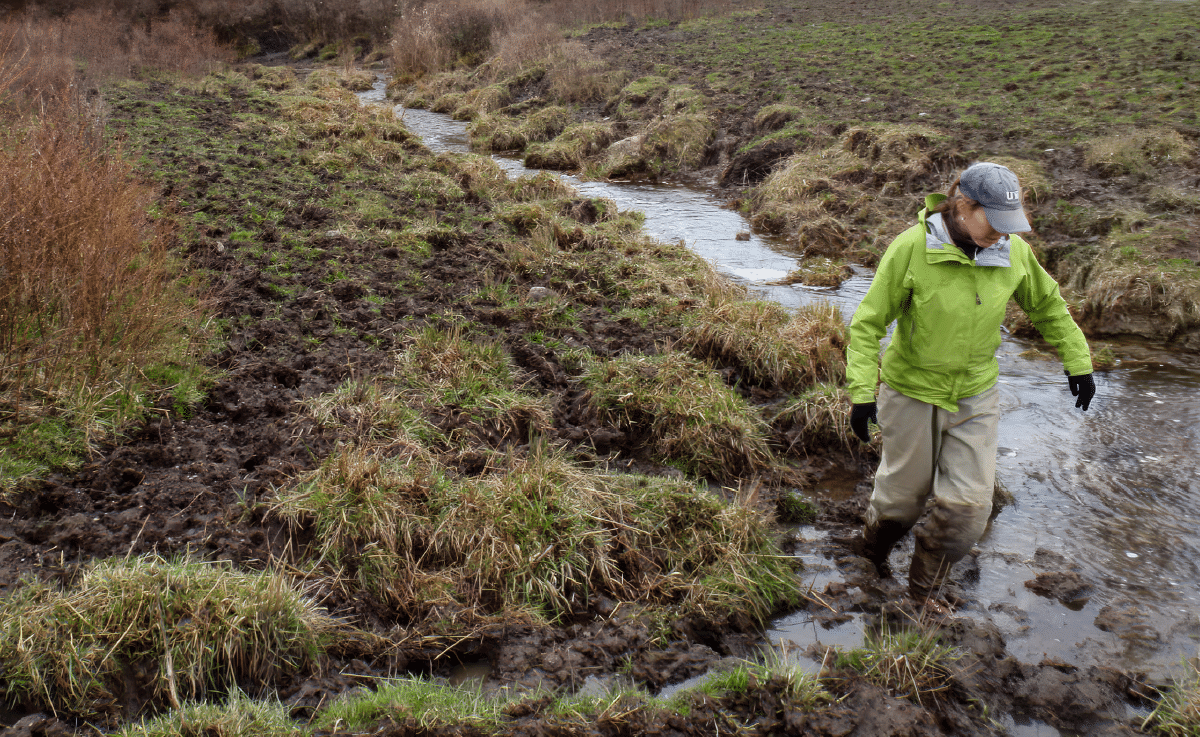
What if a single jar of pond water could reveal the hidden creatures living on an island preserve?
To track and better protect the species that call our protected lands home, the San Juan Preservation Trust (SJPT) is putting innovative science to work in the field. Through a new partnership with University of Washington researchers, our team recently began testing for environmental DNA (eDNA), the microscopic traces of genetic material that wildlife leave behind in water and soil as they move through a landscape.
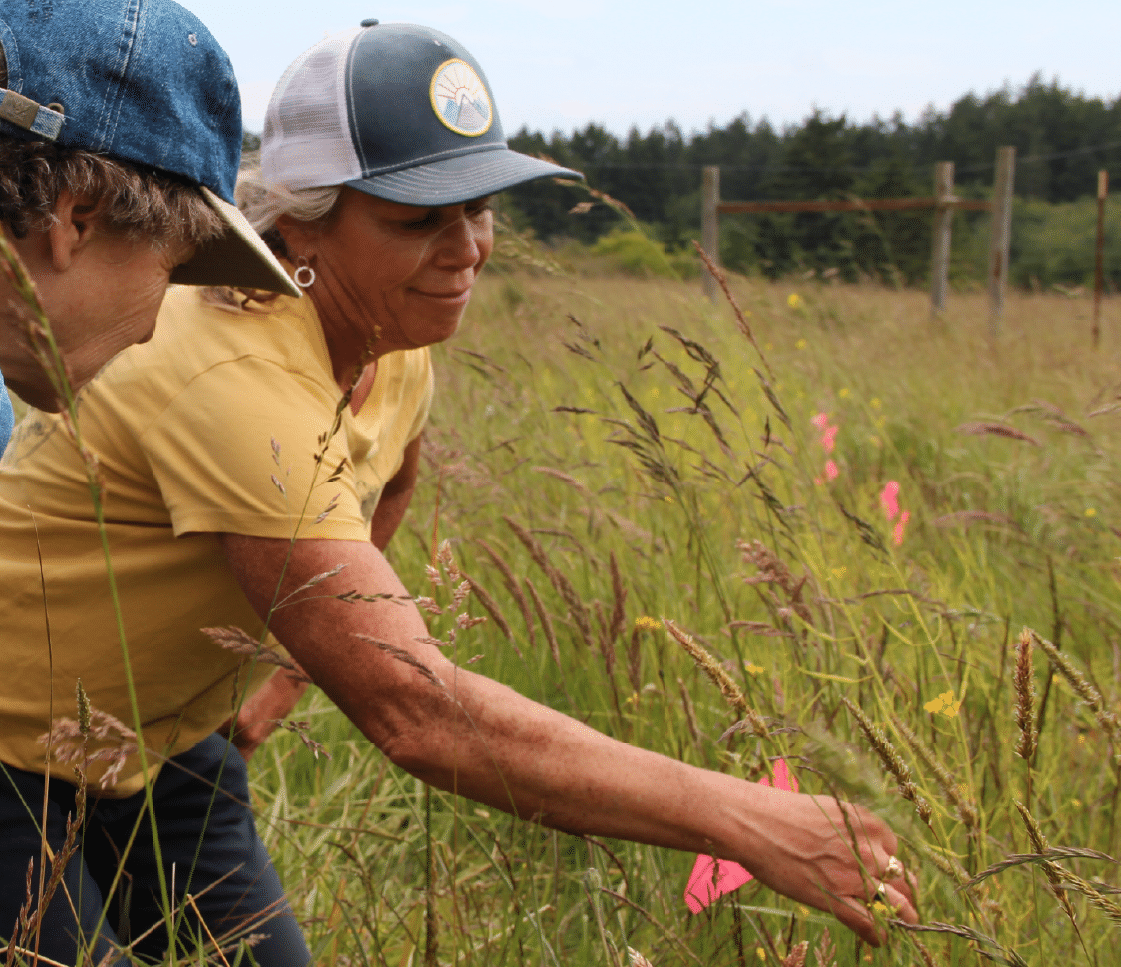
Kathleen Foley Lewis, Stewardship Director
Testing the Waters
Director of Stewardship Kathleen Foley Lewis collected freshwater samples across the Preservation Trust’s Sugarloaf Preserve, Phelps Preserve, and the privately-owned Rubin conservation easement, land protected by the Preservation Trust through a voluntary agreement with its owners. While limited sampling means we can’t draw broad conclusions yet, what turned up (and what didn’t) was intriguing.
What We Found
For starters, no deer were detected in the samples. We know deer are abundant on San Juan Island so it’s very possible that increasing the sample size would change those results.
Beyond this observation, here is what we found:
Phelps Preserve
Testing detected Sora (an elusive marsh bird), and the native three-spined stickleback fish.
Sugarloaf Preserve
Samples revealed native red-legged frogs and rough-skinned newts—and happily, no invasive bullfrogs. Interestingly, testing also picked up domestic pig DNA and a weak signal for chinook salmon. Researchers suspect the salmon was an anomaly, likely from a predator like an eagle perching nearby after feeding.
Rubin Conservation Easement
Coho salmon DNA was detected! The Rubin pond links to seasonal waterways that drain into Jensen Bay, where San Juan County testing also detected Coho downstream. This signals a waterway warranting deeper investigation and potential future salmon recovery efforts.
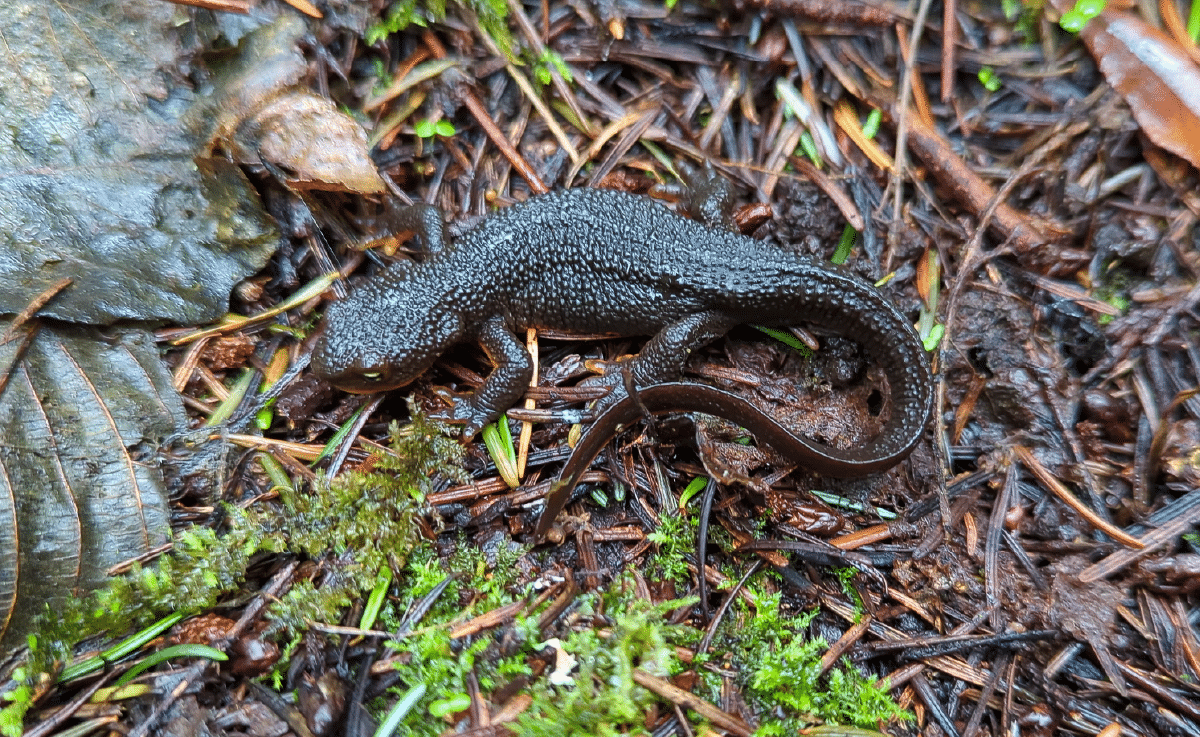
The rough-skinned newt (Taricha granulosa)
What’s Next
Each of these initial results gives our staff a fascinating glimpse into how modern technology might help guide our stewardship activities. As we expand eDNA testing to more SJPT-protected lands, we’ll gain an even clearer picture of where species might be thriving and where our habitat restoration will have the greatest impact.
Support Our Mission
To help support our mission of conserving, caring for, and connecting people to island land, please consider making a donation today.