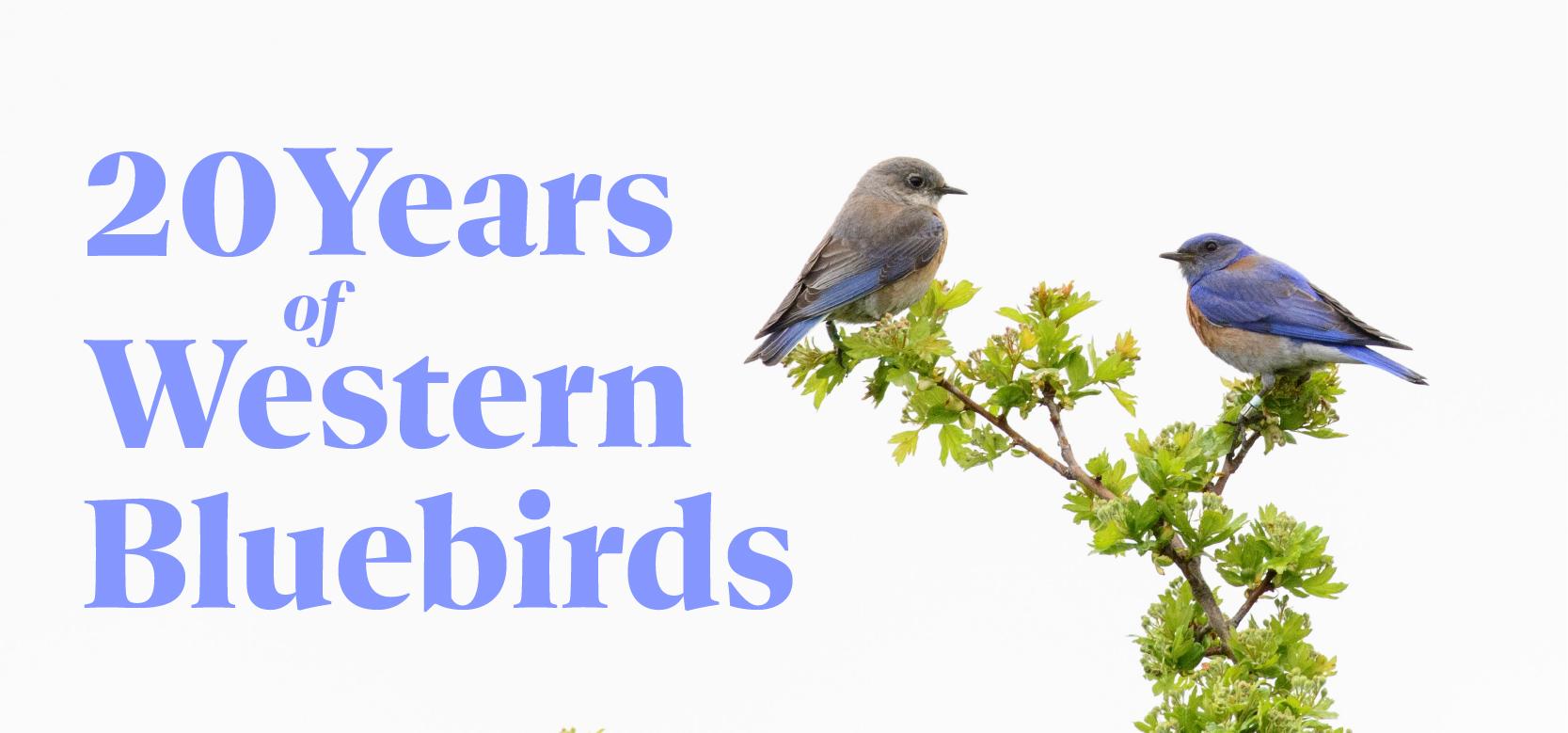
A male and female Western bluebird, photographed by Kathy Finholm at our Bluebird Blitz volunteer event in 2021.
For 20 years, one restoration effort has captured our community’s heart: the Western Bluebird Reintroduction Project.
When the San Juan Preservation Trust (SJPT) acquires a new nature preserve, we begin a long relationship with the land. Sometimes the property is in ecological balance and only requires a simple visit to confirm that all is well. Other times, active restoration—like removing invasive weeds, thinning overcrowded trees, or reintroducing native species—can prevent irreversible habitat loss.
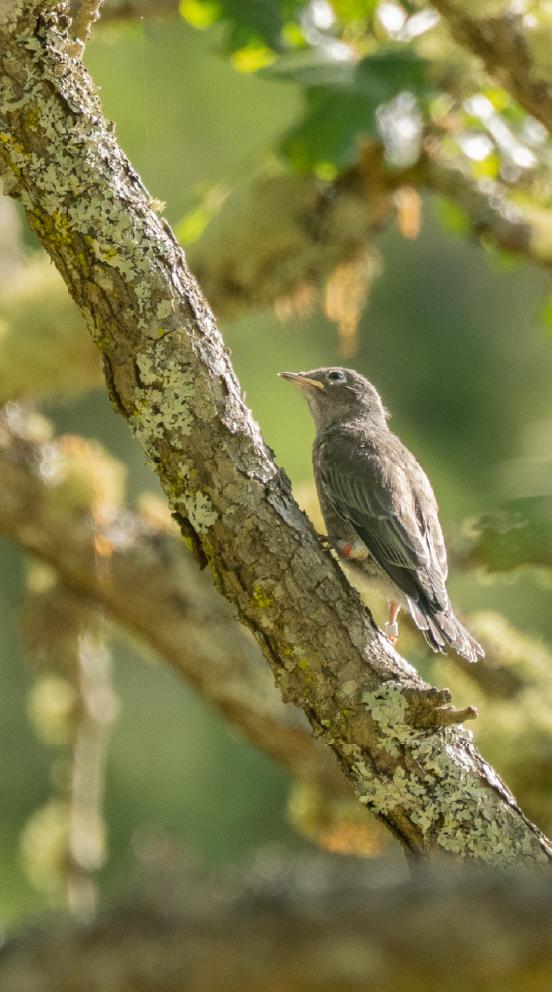
Juvenile Western bluebird translocated in June 2025 to the Alpaca Farm on San Juan Island | Staff Archive
Saving a Bird Means Saving a Habitat
Director of Stewardship Kathleen Foley Lewis kickstarted the bluebird project in 2007 to bring back a songbird that had vanished from the islands in the 1960s. While the bluebird’s colorful plumage makes it an easy conservation ambassador, saving the bluebird also means saving its home: Garry oak prairies.
By the mid-1900s, healthy Garry oak prairie had all but disappeared in the San Juan Islands. This fire-resistant, hardwood habitat once supported bluebirds and over 200 other species but now occupies less than 1 percent of its historic range. As a landowner with access to sites where these interconnected species once thrived, the Preservation Trust is uniquely positioned to restore what has been lost.
Twenty Years of Community Effort
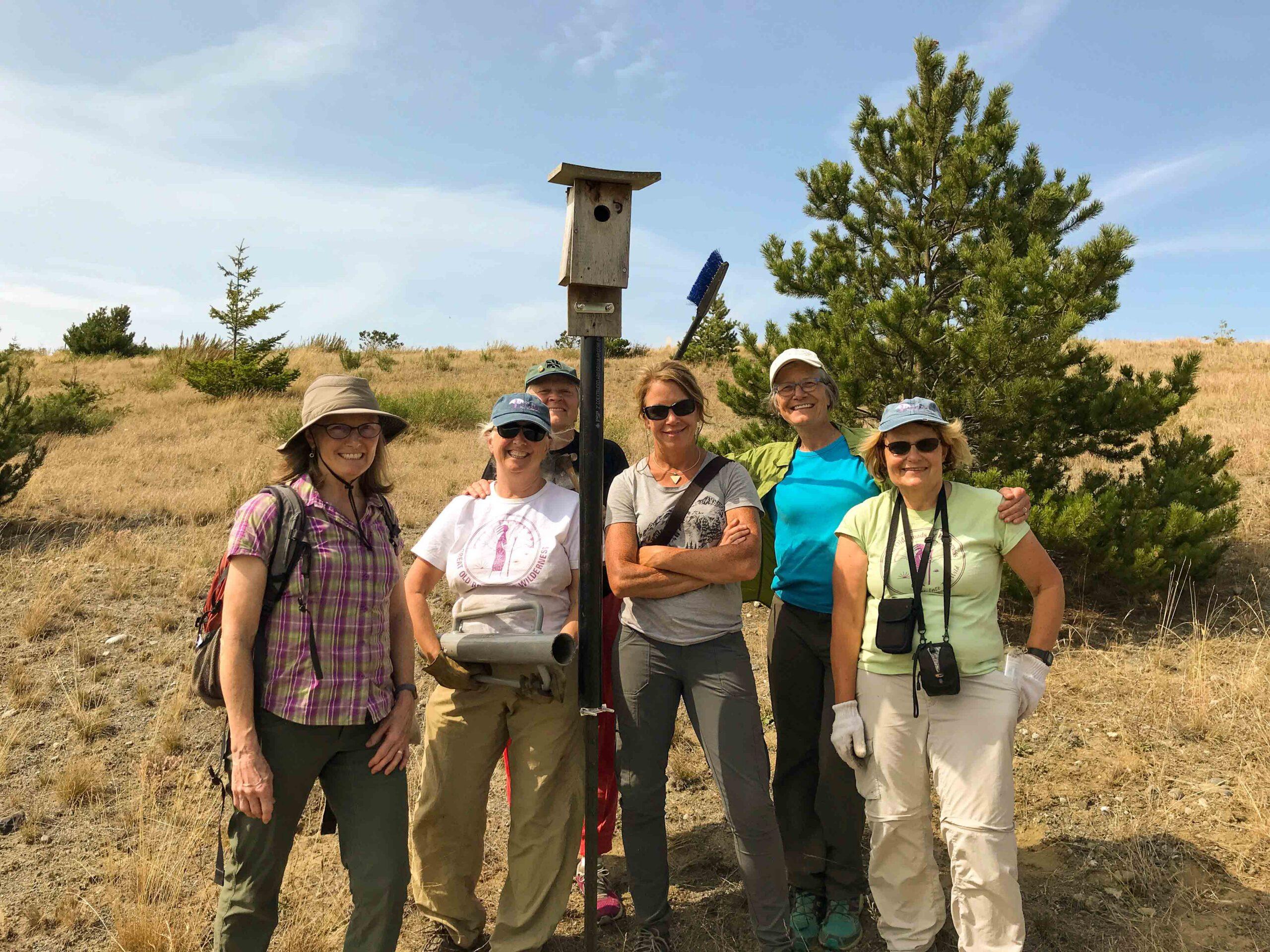
A volunteer work party in 2019 | Staff Archive
The bluebird project couldn’t exist without our volunteers. Hundreds of local nest box monitors, landowners, and partners in the San Juans and British Columbia have driven this work on the ground.
Kathy Finholm is one of them. She brought her love of bluebirds to the San Juans from Colorado 13 years ago and quickly became a vital part of the Western Bluebird Project. “I volunteer for SJPT because I love bluebirds,” Kathy shares. “The equally wonderful part about the program is the landowners I’ve come to know; it’s been a great gift to share the whole experience with them.” Kathy’s dedication earned her SJPT’s Volunteer of the Year award at the 2026 Annual Meeting this past May.
“I volunteer for SJPT because I love bluebirds,” Kathy shares. “The equally wonderful part about the program is the landowners I’ve come to know; it’s been a great gift to share the whole experience with them.”
That community effort is paying off:
Returning seasonal bluebirds on San Juan Island jumped from 18 in 2024 to 37 in 2026—an 83 percent increase toward population recovery.
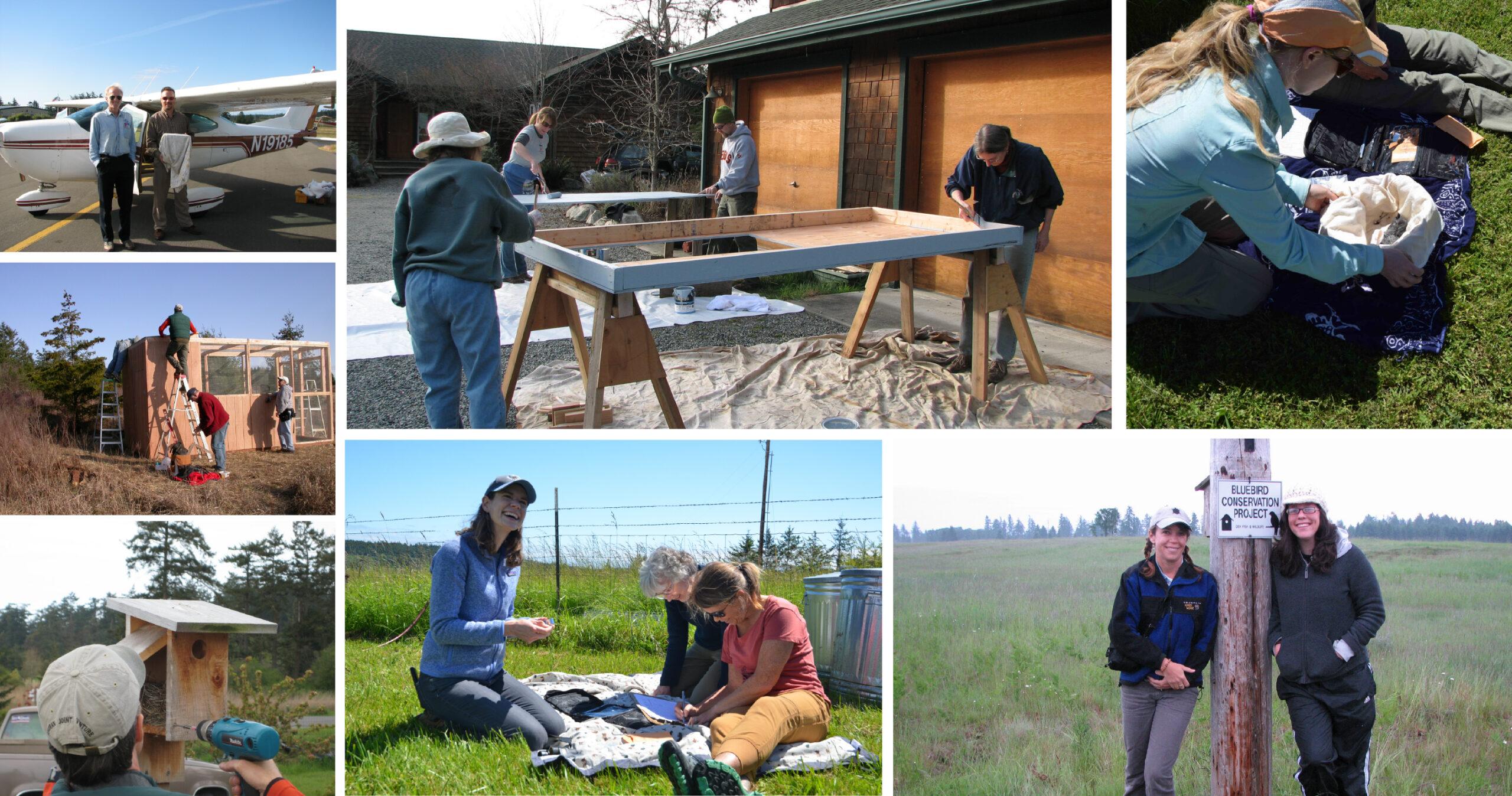
A collage of dedicated volunteers and staff from the Western Bluebird Project, spanning the last 20 years.
The San Juan Island population has grown steadily since the project began, and Vancouver Island’s population is climbing too. After a 60-year absence from the Salish Sea, we are feeling confident the Western bluebird is here to stay.
The bluebird project has done more than bring back a bird. It has raised awareness of the fragility and importance of Garry oak habitat, and that awareness is driving more restoration work by SJPT, our partners, and private landowners across the islands. Mt. Ben West, a recently acquired preserve on the west side of San Juan Island, is home to a Garry oak woodland—just one of several preserves where we’re working to restore the biodiversity these landscapes once held.
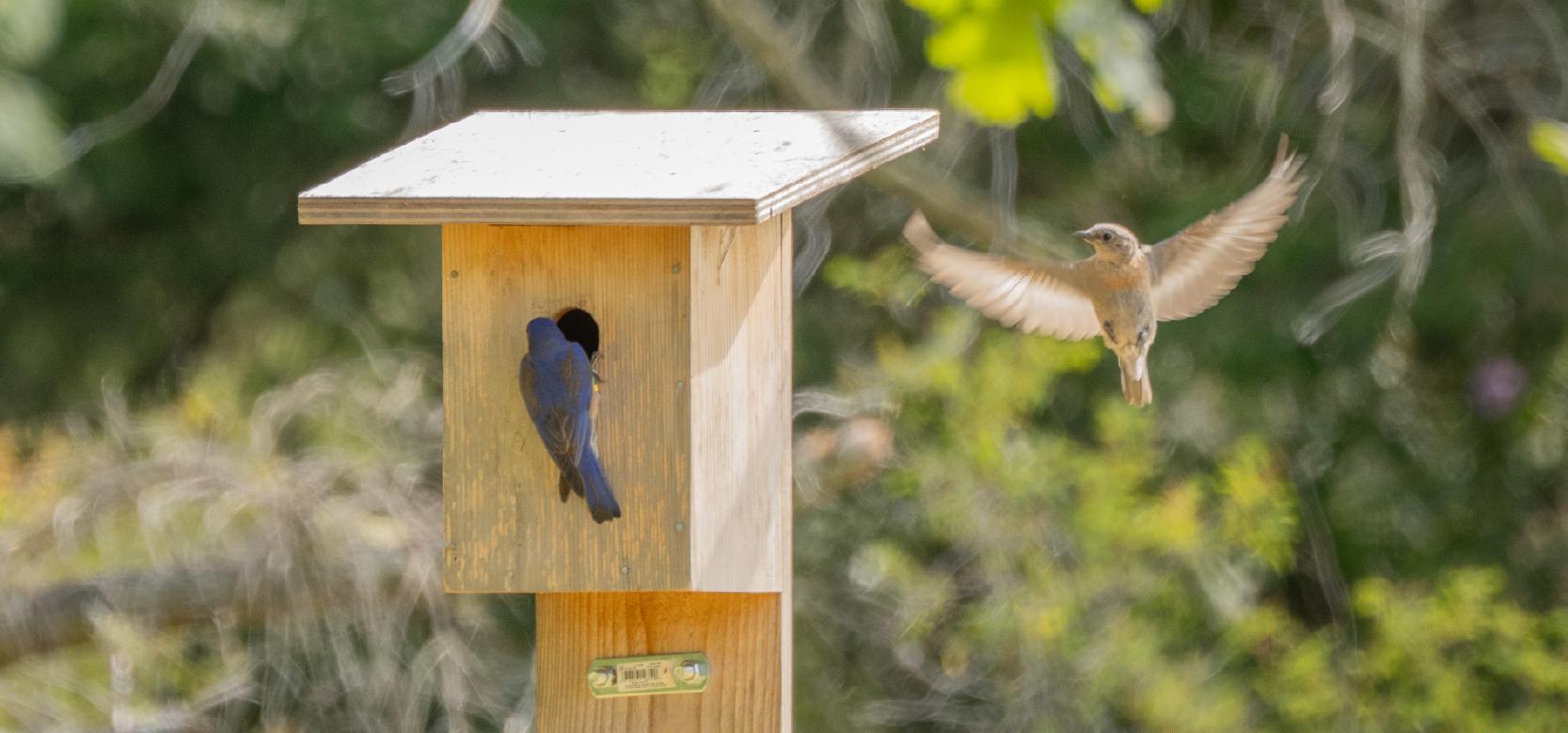
Western bluebird family translocated in June 2025 to the Alpaca Farm on San Juan Island | Staff Archive
A Success Still Being Tested
Yet, despite this success, working with nature is humbling. Just as we face challenges controlling non-native weeds, managing competition from non-native wildlife is essential to protecting biodiversity.
This July, volunteer bluebird monitors spotted an aggressive English house sparrow attacking a bluebird nest. Under the direction of SJPT staff, the volunteers quickly rescued five injured nestlings and transferred them to Salish Wildlife Rescue.
Salish Wildlife Rescue nursed four of the five back to health and released them into the wild. It’s a small and dramatic story, but it hints at the English house sparrow threat facing cavity-nesters—birds that nest in tree holes—like bluebirds, chickadees, and swallows. The landscape these birds return to has changed since they last called it home 60 years ago. Giving bluebirds safe places to nest and helping them hold their own against aggressive wildlife like the house sparrow is part of what it takes to make sure this once-lost strand in our web of life remains.
Your Partnership Makes This Work Possible
Managing and restoring island ecosystems is a long-term commitment. To every volunteer, landowner partner, and donor who fuels our stewardship work: thank you for 20 years of bringing biodiversity and birdsong back to our islands!